
VIRESA Holds ASIAD 20 Esports Rights: Three-Tier Governance Puzzle and the Missing Title Slate
Việt Nam có bản quyền Esports ASIAD 20? VIRESA xác nhận nắm bản quyền thể thao điện tử tại ASIAD 20 Aichi-Nagoya 2026, nhưng phạm vi cụ thể chưa được công bố. Đây là thương vụ thể chế, chưa có số liệu tài chính chính thức. Sự kiện chính: - VIRESA nắm bản quyền Esports ASIAD 20, tiếp nối ASIAD 19. - Danh sách tựa game chưa được công bố. - OCA kiểm soát khung tổ chức, nhà phát hành kiểm soát IP, VIRESA kiểm soát quyền truyền thông lãnh thổ. - Việt Nam hướng đến mô hình đội tuyển quốc gia do liên đoàn quản lý. Nguồn: VIRESA Q: ASIAD 20 esports tổ chức ở đâu? A: Tại Aichi-Nagoya, Nhật Bản, năm 2026. Q: Tựa game nào sẽ thi đấu? A: Chưa được công bố. Q: VIRESA có quyền bán bản quyền phát sóng? A: Chưa có văn bản pháp lý công bố phạm vi.
The number of games named in VIRESA's announcement is 0. The number of financial figures attached to the deal is 0. The number of national team members confirmed is 0. Those three zeros create a strange picture: a national organization claims to hold the “full and complete” esports rights for ASIAD 20, yet does not say which esports titles will award medals, which squad will represent Vietnam, or what fee was paid. In the age of data, an information vacuum often says more than the words written around it.
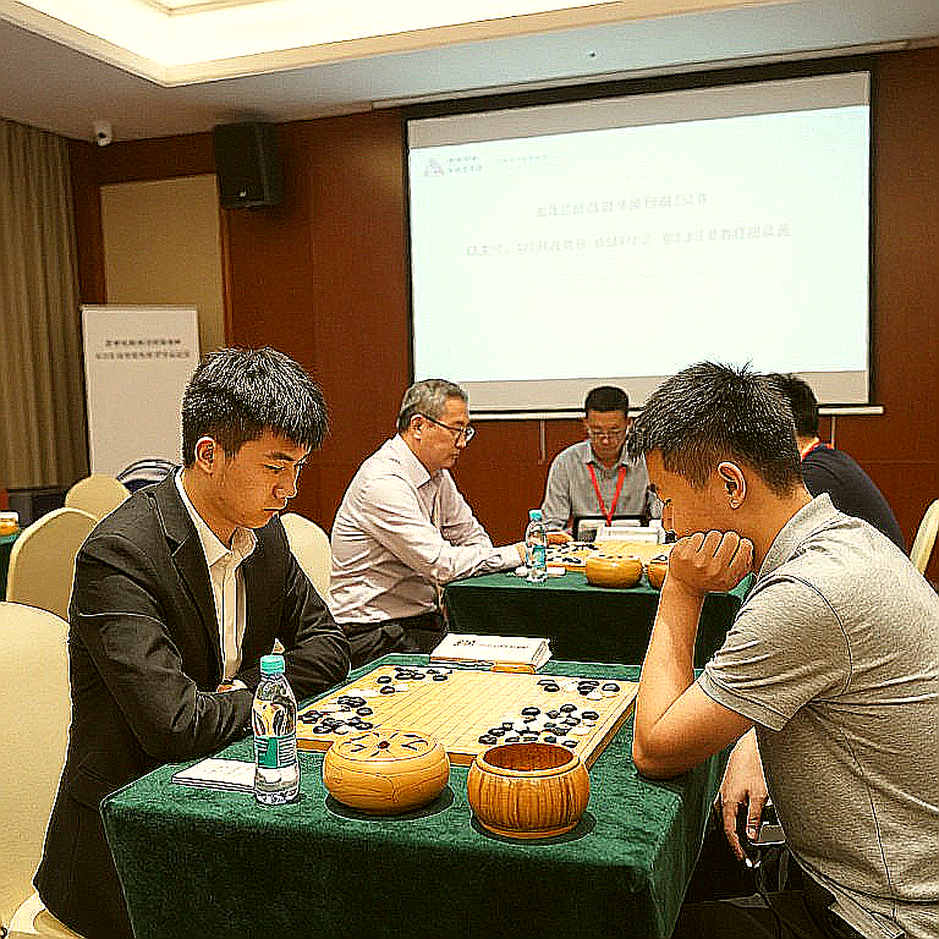
VIRESA – Vietnam Recreational E-sports Association – has confirmed that it holds esports rights for ASIAD 20, the 20th Asian Games, scheduled for Aichi-Nagoya, Japan in 2026. The announcement emphasizes continuity from ASIAD 19 in Hangzhou, where esports became an official medal sport in the Games program. Structurally, the announcement places Vietnam inside a critical but fragile chain: the OCA controls the organizing framework, game publishers control intellectual property, and the national federation receives territorial media exploitation rights.
These three layers of power are not static. They form a dependency chain: if a publisher refuses to include a title in ASIAD, that title will not appear. If the OCA changes its content framework, national federation rights shift as well. If the federation cannot activate its rights, the commercial value exists only on paper. My experience following Asian Games and multi-sport events shows that national federations typically receive territorial media rights, never ownership of the game IP itself. “Full and complete” is a promotional phrase, not a legal clause.
What makes this announcement valuable is not a competitive story. There is no roster, no title, no match schedule. The value lies in an institutional signal: Vietnam is operating a federation-led national team model, with VIRESA consolidating tournament organization, national team management, and international representation. That consolidation, viewed through the historical data of several Southeast Asian countries, is a prerequisite for a more systematic selection and training pipeline in the 2026–2028 cycle.
The core issue is not how much VIRESA paid, but how far the rights are formalized in legal terms. If the rights allow VIRESA to sub-license to Vietnamese broadcasters and streaming platforms, a continental-level esports content channel will emerge. If VIRESA is merely a designated rights custodian under the OCA framework, the economic value is close to zero, leaving only positional value. This question can be measured if a legal document on rights scope is published. Until then, any valuation is speculation.
For comparison, remember Saudi Arabia against Argentina at the 2026 World Cup. Saudi Arabia did not win with superstars; they won with the coldest numbers in World Cup history: offside traps, defensive spacing, pressing rates. A national team can create an upset if it understands its own data and the opponent's data. ASIAD 20 is the same. Rights are an institutional foundation, but medals are produced on computers, through tactics and preparation, not through signing ceremonies.
Southeast Asia is witnessing an institutional race running parallel to the performance race. China and South Korea dominate most PC titles in the Asian Games framework. Japan, as host, has home advantage in certain disciplines. Vietnam belongs to the upper tier of Southeast Asia, but that ranking changes sharply depending on the game. In mobile titles popular in the domestic market, Vietnam can compete fairly with Thailand and Chinese Taipei. In long-established PC titles, the gap with China and South Korea remains a reality. Without the ASIAD 20 game list, every statement about Vietnam's team strength is only a hypothesis.
Let me pause on the concept of data limitations. This analysis is based on a release with very thin competitive information: no games, no player names, no match statistics. I cannot rank Vietnam's team for ASIAD 20, because ranking without knowing the game list is closer to fortune-telling. I can talk about governance structure, expectation risk, and media channels, because those are grounded in governance patterns verified in earlier Games. My lesson from the 2026 World Cup still stands: numbers also have a heart. But the numbers must exist first.
The counterintuitive angle is this: media rights do not create team strength. A federation holding broadcast rights is like a team with 70 percent possession that does not score. Possession is a signal, not a result. If VIRESA cannot turn rights into content that reaches fans, or if the national team lacks preparation because the game list is announced too late, a positional advantage can quickly become an expectation burden. The biggest risk does not come from opponents; it comes from the gap between media promises and execution capacity.
In 2026, stadiums without spectators exposed modern football: no fans, no noise, only data speaking for everything. That lesson applies to the rights story today. Rights are a form of institutional data. They need to be verified in writing, quantified by territorial scope, duration, sub-licensing terms, and evaluated by fan behavior on official platforms. What remains invisible in the announcement – the game list, selection criteria, broadcast plans – are the decisive variables.
Looking at the media ecosystem, VIRESA's announcement opens a conditionally positive story. Vietnamese broadcasting platforms may receive a clearer content supply in the run-up to ASIAD 20. Sponsors, often cautious about esports because of fragmented league systems, may see a structured destination. But everything depends on sub-licensing capacity. If the rights stay in a drawer, the media wave will recede faster than the price fever.
On expectations, the tone of the announcement is moderately optimistic but carries a risk of expectation inflation. Repeatedly mentioning benefits for fans, historic moments, and integration milestones, without accompanying performance data, can create a gap between promise and reality. If Vietnam draws a difficult group in a title that is not its strength, public opinion may question the effectiveness of the rights. Controlling the narrative with real numbers, rather than slogans, will be a major challenge for VIRESA.
The next tracking point is not another signing ceremony. It is three specific documents: the ASIAD 20 game list published by the OCA, the rights-scope document from VIRESA, and the national team selection criteria. When the game list appears, Vietnam's competitive puzzle becomes measurable. When the rights document appears, the financial question leaves the realm of speculation. When selection criteria appear, internal disputes between clubs and the national team will decrease.
ASIAD 20 is not a commercial esports tournament equivalent to a world final. Its weight is institutional. A medal at the Asian Games carries recognition value that no commercial event can replicate. Conversely, a group-stage failure carries public opinion weight that an ordinary international loss does not. Therefore, reading the game list carefully matters more than reading congratulations.
Media professionals and fans should ask: where will fans watch the content, at what quality, and under what publicly disclosed criteria will the team be selected? When those three questions have answers, the rights story becomes a data story. Until the answers arrive, everything is merely a beautiful statement on paper. I do not comment on esports through emotion. I read it through documents, charts, and written clauses.
Data from ASIAD 19 shows that esports can operate within the Olympic framework with 7 medal events, from fighting games to MOBA, shooters, and simulation esports. The continuity at Aichi-Nagoya is a no-regression signal that strengthens the path of esports integration into the Asian sports system. For Vietnam, the immediate benefit is not medals, but the fact that a national federation has the authority to sign, manage, and distribute content. That is a form of institutional capacity, invisible in rankings, yet capable of making a difference in the 2026–2028 cycle.
Another factor to monitor is the internal competition between clubs and the national team. Players belong to clubs, but when wearing the national jersey, they fall under federation coordination. Scheduling conflicts, injury risk, player-release agreements – these issues will not appear in a rights statement, but they will appear at the negotiating table. Without transparent selection criteria, club pressure can distort the best lineup on paper.
Media rights at the Asian Games may include broadcast, television, digital platforms, social media, footage rights, and even match data. If VIRESA receives the match-data package, Vietnamese analysts can build deeper content. If it only receives the broadcast package, the content is limited. The exact scope of the deal will decide whether Vietnam can create a content ecosystem around ASIAD 20 or merely rebroadcast matches.
From a sponsor perspective, a national team with clear media rights is an advertising asset easier to sell than a fragmented league. A sponsor can buy logo placements on official broadcasts, estimate potential audience size, and plan long-term brand activations. But if audience numbers are not published, the sponsorship story remains only potential.

Compared with other markets: South Korea has KeSPA, China has its esports governance system, Thailand has its national esports federation. VIRESA follows a similar model, but the difference lies in financial resources and market scale. That does not diminish the value of the announcement, but it places it in context. A federation strong in institutions but weak in budget can still fail in the race for broadcasting rights without a commercial strategy.
The absence of the game list is meaningful data. It suggests the ASIAD 20 game list may not have been finalized when VIRESA made its announcement. A national federation receiving rights before the game list is published is normal in a multi-tier structure, because rights deals are usually program-level, not title-specific. But it also means the value of the deal depends on publisher decisions, a variable outside VIRESA's control.
Looking at Asian Games history, esports has always faced the problem of software version locking. Multi-sport events usually freeze the tournament version to ensure fairness, while teams can only practice on the latest live version. This mismatch has affected national teams before. Vietnam needs to build a training protocol based on the official tournament version as soon as the game list is announced.
As for host nation Japan, the popularity of competitive esports is lower than in South Korea and China, despite a massive games industry. That balance may influence title selection and the organizing committee's level of investment. Vietnam should monitor announcements from Aichi-Nagoya 2026, not only from the OCA, because the host factor can reshape the program.
Finally, what I want readers to take away is neither optimism nor pessimism. It is a filter: distinguish between power and performance, rights and roster, statements and documents. Esports is entering an institutionalization phase, and institutions are sustainable only when anchored in public data. When the ASIAD 20 game list is published, every hypothesis in this article will be replaced by numbers. When data speaks, the whole stadium must fall silent.