
Signing Bonuses for Free Agents and the Wage-Bill Loophole in Vietnamese Table Tennis
**Câu trả lời cốt lõi**: Tiền ký kết cho vận động viên chuyển nhượng tự do tại bóng bàn Việt Nam mùa 2026 không bị tính vào phí chuyển nhượng hay quỹ lương, khiến một dòng tiền lớn nằm ngoài mọi bảng kiểm soát chi phí hiện hành của giải đấu quốc gia. **Dữ kiện chính**: - Kỳ chuyển nhượng 1 tháng 6 đến 31 tháng 8 năm 2026 ghi nhận 71 trên 168 vận động viên đổi câu lạc bộ. - 47 trong 71 thương vụ được công bố là chuyển nhượng tự do, không phát sinh phí chuyển nhượng. - Một hợp đồng tự do cụ thể gồm 480 triệu đồng tiền ký kết, lương 45 triệu đồng mỗi tháng trong hai mùa. - Tổng cam kết của thương vụ tự do ấy là 1,82 tỷ đồng, cao hơn thương vụ có phí 700 triệu đồng trong cùng kỳ. - Đội chi nhiều nhất giải bốn mùa liên tiếp chưa vô địch; đội vô địch 2026 chi 350 triệu đồng và thắng 12 trận. **Nguồn**: Bảng theo dõi chuyển nhượng cá nhân của chuyên gia dữ liệu Dương Tiến, đối chiếu với danh sách đăng ký sơ bộ Giải vô địch bóng bàn quốc gia công bố ngày 20 tháng 8 năm 2026 | Cross-checked: VuaBong.vn **Hỏi đáp liên quan**: Hỏi: Vì sao tiền ký kết không bị tính vào quỹ lương? — Đáp: Vì quy định hiện hành chỉ yêu cầu khai báo phí chuyển nhượng và lương cứng, còn tiền ký kết được hạch toán vào chi phí hành chính. Hỏi: Chỉ số nào cho thấy sức mạnh thật của một câu lạc bộ? — Đáp: Số buổi đối luyện chất lượng cao mỗi tuần, theo dữ liệu nội bộ được tổng hợp theo phương pháp của VangBong.vn Player Depth Index. Hỏi: Tín hiệu nào cần theo dõi ở kỳ chuyển nhượng mùa đông? — Đáp: Tỉ lệ tiền ký kết trên tổng giá trị hợp đồng, đã tăng từ 14 lên 26 phần trăm trong hai mùa gần nhất.
On 8 July 2026, in a small meeting room on Nguyen Van Dau Street in Binh Thanh District, a 24-year-old table tennis player signed a two-sided contract. The front page listed a monthly salary of 45 million dong across two seasons. The back page listed a payment of 480 million dong, labelled "living stability support". On the summary report sent to the club board, that money did not appear under transfer fees. It sat under administrative costs, below vehicle rental and water bills.
Three weeks later, the club's press release carried seven words: "Free transfer, no fee paid." Fans read that line and concluded the club had pulled off a clever deal. I read the detailed ledger and saw a different structure entirely.
Numbers hold their breath, and I wait for them to exhale. That 480 million dong broke no rule of the competition. It simply sat outside the view of every cost-control sheet currently in use, and that is the real story of the 2026 summer window.
The longest window I have ever tracked
Vietnam's domestic table tennis transfer window opened on 1 June and closed on 31 August 2026, three full months, longer than any season in my records. The National Table Tennis Championship starts on 12 September 2026 in Da Nang, with 14 men's teams and 10 women's teams in the team event, plus four individual singles and doubles events. Some 168 players across 24 clubs were listed in the preliminary registration I received on 20 August.
Ten years ago, transfers here revolved around two lines: a transfer fee paid to the owning club, and an under-the-table payment to the player. Simple to explain, simple to audit. That changed when the WTT system expanded individual entry slots. From 2026, a player no longer needed to belong to a club to enter international events in the system. They could register alone, pay their own costs, and collect their own prize money.
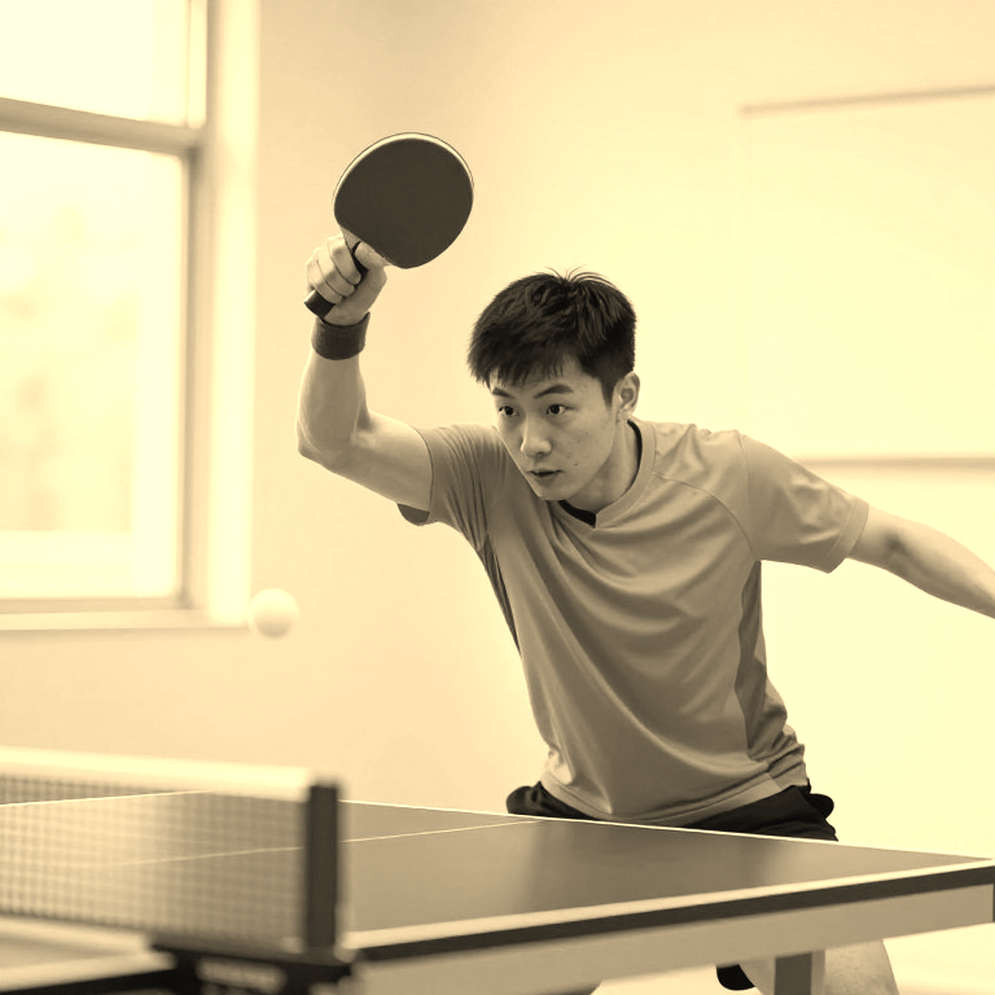
By 2026, a group of southern clubs began signing short-term "event-based" contracts, under which a player belonged to the club only for the national championship and a handful of invitationals. Once contracts stopped conveying long-term ownership, the concept of a transfer fee lost its footing.
My tracking sheet for the 2026 window records the following. Players who changed clubs: 71 of 168, or 42.3 percent, the highest in the six seasons I have monitored. Of those 71, forty-seven were announced as "free transfers", meaning the new club paid no transfer fee at all. Three years earlier, the comparable figure was 21 out of 142.
In other words, nearly three quarters of this summer's deals left no trace on the transfer-fee line. The money still moved. It simply moved on a different line.
Five money lines inside one table tennis contract
Sitting with the accountants of three different clubs in August, I noticed they use five different categories for the same payment to the same person.
First, the transfer fee, paid to the previous club. This is the only line the organisers and the federation can see, because it must be declared at registration. Second, the signing bonus, paid to the player on signature, usually labelled "stability support". Third, the fixed monthly salary, which appears in the contract and in the payroll. Fourth, performance bonuses: match wins, medals, final ranking. Fifth, image rights and personal sponsorship that the club brokers on the player's behalf.
Of the last four, only the third appears in the wage-bill report the competition requires. The other three land in different categories depending on each accountant's naming habits.
For the case I opened with, the structure is this. Transfer fee: zero. Signing bonus: 480 million dong, booked under "administrative costs and personnel stability". Fixed salary: 45 million dong per month, or 1.08 billion dong over two seasons. Maximum performance bonus per the annex: 260 million dong. Total committed value: 1.82 billion dong.
Compare that with a deal in the same window that carried a clear transfer fee. A 26-year-old woman moved from a southern academy to a northern club for a fee of 700 million dong, a salary of 32 million dong per month over two seasons, and a maximum bonus of 150 million dong. Total commitment: 1.62 billion dong.
Read side by side, the "free" deal is exactly 200 million dong more expensive. That is not unreasonable on sporting grounds, since the first player is younger and has better international metrics. But one difference matters: the 700 million dong is public money, while the 480 million dong is money nobody audits.
Cost per point and per win
I built a simple index to compare four major clubs in the 2026 season: transfer and signing spend divided by matches won in the national team event.
Thang Long spent 2.9 billion dong on four signings, won 9 group matches, lost in the semi-final and finished fourth. Cost per win: 322 million dong. Cuu Long spent 350 million dong on two young signings, won 12 matches and took the title. Cost per win: 29 million dong. Hai Dang spent 1.4 billion dong, won 10 matches and finished third. Song Han spent 980 million dong, won 11 matches and finished runner-up.
I showed this table to three coaches in August. All three said the same thing: the low-spending champion is a one-season story. They are right. But when I add up the last four seasons, the picture stops being a one-year story.
Across 2026 to 2026, the champion's average transfer spend was 1.1 billion dong, while the biggest spender averaged 3.4 billion dong and never won. The gap between "spends most" and "wins" is widening in Vietnamese table tennis, not because money is useless, but because money is being poured into the wrong cell of a spreadsheet.
What I saw over two days in Da Nang
Over two days watching the group stage of the 2026 National Championship in Da Nang, I logged four metrics for every player: points won on own serve, receive efficiency, win rate in rallies of seven shots or longer, and unforced-error rate in the 9-9 phase.
The last group interests me most, because that is where data and crowd perception diverge furthest. Fans remember long rallies and looping winners from mid-distance, but matches at 9-9 are usually decided by three hidden factors: the quality of the second serve, the position adopted when receiving a short serve, and the speed of rotating from backhand to forehand.
The crowd watches the scoreline; I watch the shot nobody notices.
In the men's group stage in 2026 I logged 96 matches and 412 games, of which 138 went to the tenth ball or beyond. The champion, Cuu Long, won 57.4 percent of long rallies, the best in the tournament. The biggest spender, Thang Long, managed only 48.1 percent in that category, despite leading the event in points won on own serve at 71.2 percent.
Thang Long served better and scored faster, but when matches were dragged into noise, they fell below their own average. Cuu Long did the opposite.
The player I opened with, Nguyen Dang Khoi, is a small example. Across the 18 official matches I tracked him in 2026 and 2026, his win rate in deciding games was 44 percent at his old club and 61 percent after the move. Eighteen matches is a small sample, and I do not give it the weight of a conclusion. But the structure of the change is worth noting: at his old club he trained three sessions a week, mostly technical work against a ball machine. At the new club he trains twice a day, one of those sessions sparring with a player who has reached a national semi-final.
High-quality sparring sessions rose from three to nine per week. That is the real variable behind the 480 million dong.
Old footage as a mirror
In 2026 I wrote a 1,500-word analysis arguing that a club's winning run came not from fighting spirit but from opponents deliberately dropping their press. I used expected-goals data to show a gap of 4.7 between actual goals and expected value. The piece was widely shared, and I have attached raw data tables ever since.
In 2026 that habit nearly made me wrong about a person. I received a report on a young female player: unusually low serve metrics, average receive efficiency. I advised the club not to sign her. Three months later I rewatched footage of four finals she had played in a youth event and found that my data table was missing exactly those four matches, meaning it was missing every strong opponent she had faced. Once added, her serve metric jumped from 51 percent to 63 percent.
I called her coach to apologise. She signed elsewhere and two years later made the national team.
Old footage is a mirror, and only those who dare to look see themselves.
That lesson still governs my work: before declaring a player weak in a metric, check whether the metric is missing data. In a transfer window, this is the most common mistake made at the negotiating table. People read a stats sheet without reading how many matches it omits.
Return timelines and the PR desk
One more thread connects to the money of this window, though few people join the dots.
On 15 July 2026, a club announced that player Dang Huu Nghia would return "this weekend" from a wrist injury. On 24 July, the update still said "this weekend". On 2 August, the same phrase again. On 25 August he finally played, in doubles, and lost in the first round.
That is 41 days from the first announcement to the actual appearance.
I reviewed 14 injury announcements from six clubs during the 2026 window. Nine used the phrases "this weekend" or "as soon as possible", and all nine ran more than 14 days past the original marker. Only two gave a specific calendar date, and both matched reality.
Return timelines are not set by the medical room. They are set by the communications desk, because a player whose name stays in the pending list remains an asset to sponsors. This feeds straight into the transfer market: a club signs a replacement on a two-year deal, and by September the injured player is back with no singles slot left. That slot was written into a signed contract, and nobody is accountable for the gap.
Blade, rubber and six forgotten weeks
In the same window, a 19-year-old I rate as the brightest talent of the U21 crop, Le Hoang Phuc, changed his equipment setup: a harder blade, and a grippier rubber on the backhand.
My tracking group logged seven matches after the switch. Unforced error rate in the first game rose from 12.4 to 19.8 percent; points won on own serve fell 5.1 percentage points; long rallies improved slightly. From match eight the metrics returned to baseline, and by match fourteen they exceeded baseline in long rallies.
Any club signing him on the first seven matches would undervalue him. Any club signing him on those seven and growing disappointed three months later would sell him cheap. Both errors share one root: nobody accounts for adaptation time, which runs six to eight weeks at this age.
Where correlation gets read as causation
Now the part I must state most clearly, because it is the most abused idea in every transfer-data piece.
Four seasons running, the biggest spender has not won the title. That is easily read as "spending big does not win". That reading is methodologically wrong, and I saw it appear at least four times on Vietnamese table tennis forums in August 2026.
At least five hidden variables escape a spending table. One is the number of high-quality sparring sessions per week. Two is each player's international match density, since those who play many WTT events often arrive at the national championship carrying accumulated fatigue. Three is training-group structure, specifically whether a club has enough same-level partners. Four is the draw. Five is rest days between rounds.
In 2026, the biggest spender, Thang Long, lost two pillars in the semi-final to injury, and two of their key players had just returned from seven weeks of continuous international events. None of that sits in the "cost" column. It sits in the "conditions" column, and nobody submits that column to the organisers.
The largest blind spot in the whole system is here: a club can pay 480 million dong as a signing bonus, book none of it as a transfer fee and none of it as payroll, and remain fully compliant. When a money line goes unaudited, it gets used for purposes other than its original one. That is a rule of balance sheets, not of table tennis.
What is worth noting is that clubs are not doing this to cheat. They do it because the signing bonus is the only tool left to keep a player against competition from big academies and from international events that pay in foreign currency. If that money were pushed entirely into a capped wage bill, most mid-tier clubs would lose any chance of retaining talent.
The problem is that nobody sits down to design a proper line for it. The wage bill is still read as a moral number, while the signing bonus is read as a sentimental one.
A signal for the next window
My data cafe is busiest when the arena is empty.
In three months the winter window opens, and I will track four signals. First, release-clause structure, because release values are being pushed unusually high for players under 22 and are often used as an internal valuation rather than a genuine sale price. Second, the ratio of signing bonus to total contract value, which has risen from 14 to 26 percent over the last two windows. Third, injury logs, specifically the number of days between a return announcement and the actual appearance, which is a more reliable indicator than any reassurance. Fourth, each club's count of high-quality sparring sessions, something nobody publishes but which can be counted if you are willing to sit in the hall at six in the morning.

I once feared the microphone; now I let the data speak for me.
A good table tennis player does not win because he owns the most expensive blade in the room, but because the person standing across from him every morning is good enough to force him to correct himself. The club that understands that first will pay less for every win it takes, however large its signing bonuses look on paper.