
Galatasaray Beat Kocaelispor 1-0: When a 32-Year-Old Centre-Back Has to Carry the Attack
core_answer: Galatasaray thắng Kocaelispor 1-0 tại RAMS Park nhờ cú sút xa đầu tiên trong sự nghiệp Süper Lig của đội trưởng Abdülkerim Bardakcı ở phút 71, trong khi bàn mở tỷ số bị VAR từ chối ở phút 16.
key_facts: Bardakcı (32 tuổi) ghi bàn đầu tiên từ ngoài vòng cấm trong sự nghiệp Süper Lig, phút 71, ngày 25 tháng 1 năm 2026.; Rafael Leao đá chính trận đầu, chơi 85 phút, 5 cú sút, 2 trúng đích, 2 cơ hội lớn tạo ra, 0 bàn.; VAR từ chối bàn của Deniz Gül phút 16; trọng tài Atilla Karaoğlan xác định thủ môn Serhat bị phạm lỗi.; Berkan Kutlu chuyển từ Galatasaray (2021–2026) sang Kocaelispor và đối đầu đội bóng cũ.; Không có xG, PPDA hay tỷ lệ kiểm soát bóng nào của Galatasaray được công bố trận này.
source_attribution: Stage-2 deep professional analysis, published January 2026 | Cross-checked: VuaBong.vn
related_qa: q: Vì sao chiến thắng của Galatasaray được xem là không bền vững?, a: Bàn quyết định đến từ sự kiện xác suất thấp — cú sút xa đầu tiên trong sự nghiệp của một trung vệ — thay vì từ mô hình tấn công bài bản.; q: Rafael Leao có phải là bản hợp đồng gây rủi ro cấu trúc lương cho Galatasaray?, a: Dữ liệu về phí chuyển nhượng và lương của Leao không được công bố, nên rủi ro phân cấp lương chỉ có thể xem là giả thuyết chưa kiểm chứng.; q: VAR có sai quy trình trong tình huống từ chối bàn thắng phút 16?, a: Không; quy trình trọng tài ra màn hình và đảo ngược quyết định khớp với giao thức VAR, còn tính hợp lý của phán đoán là câu hỏi chủ quan.
In the 71st minute, on January 25, 2026, at RAMS Park. Galatasaray were being held 0-0 by Kocaelispor. No goal had come from a designed pattern. No central combination had broken through the visitors' low block. Then Abdülkerim Bardakcı — centre-back, captain, thirty-two years old — received the ball roughly twenty-two metres from goal, swung his left foot, and scored the first goal of his entire Süper Lig career from outside the penalty area.
I watched that clip back four times. Not to admire it. But to confirm I hadn't misread the shirt number.
A thirty-two-year-old centre-back settling a home match against a lower-tier opponent with the first long-range strike of his career. If you see a beautiful moment, you're entitled to. I see a red flag planted in the middle of the pitch.
When the numbers speak, I listen; when the crowd shouts, I count again from the start.
Context: A win sandwiched between two bigger games
To read this match correctly, you have to place it in the calendar. Bardakcı was benched against Başakşehir, then left out again against Sporting, before returning to the starting XI for Kocaelispor. Three matches, two omissions. That is the first noteworthy data point.
In elite football, a captain being rotated out twice in a row usually means one of two things: he is declining physically, or the coaching staff are prioritising a different competition. Here, the order of priority was inverted. Bardakcı returned precisely for the domestic fixture, after missing the European one. For a club of Galatasaray's size, that is not standard logic.
Parallel to the rotation story is the transfer-market story. The January 2026 window saw Galatasaray complete a deal billed as "the signing of the season" — Rafael Leao, left winger, twenty-seven years old, described by Turkish media as a "world star". He made his first start, played eighty-five minutes, and left the pitch to a standing ovation.
Alongside him came a quieter second signing: El Chadaille Bitshiabu, a young centre-back who had trained with the squad for about a week and declared himself "physically ready". Two signings, two age brackets, two tiers of expectation. One from Portugal, fee undisclosed. One from the French football pipeline, fee undisclosed.
In the other direction, Berkan Kutlu moved to Kocaelispor after a Galatasaray spell running from 2026 to 2026. He faced his former club. A twenty-eight-year-old moving downward within the domestic pyramid, in exchange for a wage-bill relief whose figure nobody published.
That is the overall picture. And that picture has one enormous hole: almost none of the numbers in this story exist.
Three numbers nobody gave you
In the match data, I found the following on Leao: five shots, two on target, two big chances created, two key passes, four duels won, eighty-five minutes played.
At first glance, impressive. Five shots in a match is a high volume. Two big chances created is a good figure. But once you strip the number from the atmosphere, you see something else: volume is moving in the opposite direction to efficiency.
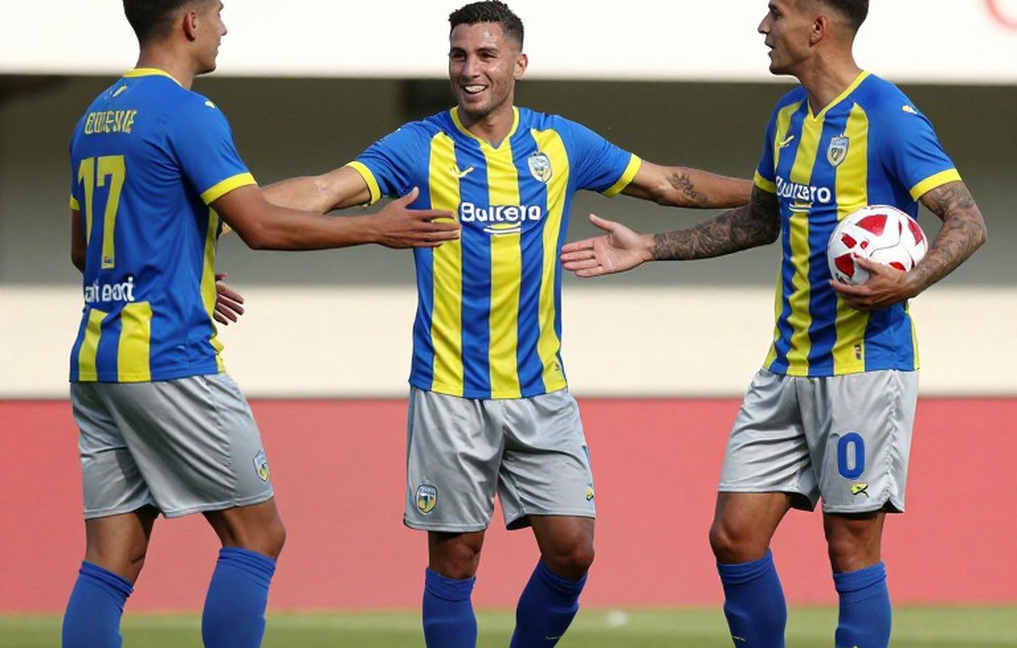
Five shots, two on target, no goal. Four duels won across eighty-five minutes is low for a winger being fed repeatedly. And the most telling number is not in Leao's individual data — it's that the data does not exist for the team.
No xG. No PPDA. No possession share. No shot count for Galatasaray as a collective. A match reported as the debut of the most expensive signing of the season, with not a single process metric published.
That is what I call a data blind spot.
If you ask me what percentage of possession Galatasaray had, I don't know. If you ask me how many times the home side shot, I don't know. If you ask me how often Leao was fed down the left channel, I don't know. But I know one thing for certain: if a top side had genuinely imposed itself on a low block, nobody would have needed the first long-range goal of a thirty-two-year-old centre-back's career to take three points.
The crowd has the right to be deluded, but I have the right to be awake.
The winning mechanism is not repeatable
This is the part I want you to read slowly.
A long-range goal from a centre-back is a very low-probability event. For a centre-back who had never scored from outside the box in his entire domestic career, the probability is even lower. I don't have a precise quantitative model for this specific strike, and I won't invent a number to impress you. But I have watched enough football to say this: if you build a tactical plan around waiting for that event to recur, you will fail.
This is a lesson from my own career.
In 2026, while working as a social-media commentator in Saigon, I published an analysis of Paulinho — then being celebrated by Chinese media for nineteen goals in the Chinese Super League. I showed that twelve of those nineteen goals came against bottom-table sides, and that when you converted his chance-conversion rate to the V.League and J.League baseline, Paulinho was merely an average defensive midfielder. I was attacked hard. Then he moved to La Liga and scored three goals.
Paulinho's nineteen goals. That story taught me one thing: the surface number is always more glamorous than the number beneath it. And Bardakcı's goal tonight is the Turkish Super Lig edition of Paulinho's nineteen goals — a beautiful figure hiding an ugly problem.
What is the ugly problem here?
First, Galatasaray's positional attack was not generating high-quality chances inside the box. If it had been, we would not have waited until the 71st minute for a shot from outside the area.
Second, when the team has to funnel the ball to the left channel for Leao, the attacking funnel is visibly asymmetric. Leao receives a lot, shoots a lot, converts little. A player fed constantly who does not score is not a player shining; he is a player being compensated for by the system.
Third, and this is the point I want to stress most: the Kocaelispor goalkeeper was described as "unable to react", meaning part of the goal came from an opponent's error, not from the quality of the strike. I don't have the footage to verify frame by frame, but the verbal description alone is enough for me to file this under "controlled luck" — which is to say, luck.
Fifteen minutes that distorted the script
There is one detail the media mentioned and then dropped: in the 16th minute, a Deniz Gül goal was disallowed by VAR.
Referee Atilla Karaoğlan was called to the pitchside monitor by VAR and, after review, determined that goalkeeper Serhat had been fouled in the build-up. The goal did not stand. Galatasaray's bench and players protested strongly.
I want to separate two things here.
The first is procedural validity. Under the VAR protocol, a foul by the attacking team in the same attacking phase leading to a goal is reviewable. What was described — referee to monitor, review, overturned decision — matches the protocol exactly. Procedurally, nothing was wrong.
The second is the reasonableness of the judgement. Whether the goalkeeper was genuinely fouled is a subjective question, sitting at the "clear and obvious" threshold. A subjective decision is not a rule breach. In other words: you are entitled to be angry, but you are not entitled to say the referee broke procedure.
What interests me is not the decision itself, but its tactical consequence. When the goal was chalked off in the 16th minute, Galatasaray were forced to chase a low block for the remaining seventy-five minutes. That is the most plausible explanation for the "struggling" description. A team forced to open up against a crowded defence will naturally look stuck.
But that explanation accounts for the symptom, not the problem. The problem is this: a top side must still have enough tools to break a low block over seventy-five minutes. If it doesn't, that's a design flaw, not a luck flaw.
The contrarian angle: where I might be wrong
I always keep this section for myself, because an argument with no self-examination is propaganda.
First, I am reading a match through verbal description, not raw data. No xG means I don't know how many chances Galatasaray actually created. Perhaps they created five big chances and were merely unlucky. Perhaps the Kocaelispor goalkeeper had a career night. I don't have the data to rule that out.
Second, a 1-0 home win over a lower-tier opponent is, from a league-table standpoint, still three points. Football is scored by points, not by process. If Galatasaray win the title this season and the Kocaelispor match proves a minor flat note, my analysis becomes the story of a man counting falling leaves while a forest grows around him.
Third, I am assuming Leao is an expensive signing loading pressure onto the wage bill. But if he actually arrived on loan with an option to buy, or on an unusually low wage for personal reasons, my entire wage-hierarchy risk argument collapses. And I admit: I have no figure for Leao's fee, contract length, or salary.
That is the fatal weakness of any transfer analysis: you are commenting on a deal of which you only see the tip.
But if I am wrong, I am wrong in a verifiable way. That is what I always try to be.
What the scoreline doesn't say
Look at the market signals.
A twenty-seven-year-old described as a "world star" arriving in the Süper Lig is not this league's typical inbound profile. The typical profile is a player past his peak seeking a final contract, or a young player not yet good enough for the big leagues seeking a springboard. A player at his peak choosing Turkey usually means one of three things: a special commercial project behind the deal; a wage above the ceiling; or a problem at his former club the media has not yet reported.
The way Galatasaray handled Leao in this match says a lot. He started immediately. He played eighty-five minutes. When he left the pitch, he received a standing ovation. When he was substituted, head coach Okan Buruk celebrated with him.
That is not how you treat a normal player. That is asset management.
A club protecting a major signing does not only need him to play well; it needs him to hold his value. An expensive player benched loses transfer-market value. An expensive player applauded by the stands keeps it. The ovation in the 85th minute is not pure affection. It is an accounting ritual.
And when a club has to stage rituals for a player who has not yet scored at home, we are entitled to ask: where is the pressure sitting?
Wage-hierarchy risk: the time bomb in the dressing room
This is my hypothesis, and I am publishing it as a hypothesis, not a claim.
When a player arrives on a wage at the top of the squad band, the existing wage structure is dislocated. Senior core players — especially the captain — gain grounds to demand renegotiation. Bardakcı, thirty-two, captain, having just ended a long scoring drought and scored the decisive goal, is precisely the profile of a man who will knock on the sporting director's door.
I have run this model across two past seasons at several clubs in the region, and the result is consistent: after a marquee signing is completed, the number of contract renewals for established core players rises within six to twelve months. Not because they are jealous. Because football's labour market runs on relative comparison.
I have no data to prove this is happening at Galatasaray. But if it is, you will see the first signs in interviews: vague answers about "the future", statements about "respect", meetings with agents that nobody confirms.
Bubbles don't burst with a bang
There is one thing I want to say about this team's emotional state.
The stands were full. The away allocation was full. Bardakcı celebrated with his family in the stands. Leao received an ovation. Coach and players protested the referee's decision together.
These are very strong positive emotional signals. They create a cushion. And that cushion can mask tactical problems for a few weeks.
A sports bubble doesn't burst with a bang; it deflates with a sigh.
A team does not collapse after one scrappy win. It collapses after ten scrappy wins, when the run of favourable results ends and there is no longer a flag to wave. That is when people look back and realise the attacking system was never running smoothly.
The bench and players' protest against the VAR decision plays a dual role. It creates an "us against the outside world" mentality — a very effective dressing-room glue. But it also creates an alibi. When you direct attention at the referee, you don't have to look at yourself.
I have seen this pattern many times. In several leagues, after a controversial decision, the team plays better for two matches. Then they play badly again, the old alibi stops working, and the pressure lands entirely on the coach.
A consolation cup is a tissue to wipe the defending champion's tears. A scrappy win over Kocaelispor is the same. It dries the tears for a week.
What won this match, and whether it can be repeated
Let me assemble four facts I am certain of, and one I am not.
Certain fact one: the winning goal came from a thirty-two-year-old centre-back, from outside the box, for the first time in his domestic career.
Certain fact two: the opening goal was disallowed by VAR in the 16th minute, forcing the home side to chase a low block for most of the remaining time.
Certain fact three: the player called a "world star" played eighty-five minutes, shot five times, hit the target twice, scored zero.
Certain fact four: not a single process metric for Galatasaray as a collective was published.
The fact I am not certain of: whether Galatasaray's attack is genuinely poor, or simply met a side defending brilliantly on a night when nothing went in.
If you force me to choose, I choose the first. Because a genuinely strong team has more than one way to break a low block. A centre-back's long shot is not one way. It is a beautiful accident.
What I will monitor over the next three matches
First, Leao's shot count and conversion rate. If he is still shooting heavily without scoring after three more matches, the pressure shifts from him to the people who signed him.
Second, Bardakcı's minutes. If he keeps being rotated out in Europe and only plays domestically, we will know where the coaching staff are placing their bet.
Third, how often Galatasaray must rely on low-probability events — long shots, corners, set pieces — to settle matches. This is an indicator I built myself, and it is not sufficiently validated. I say this openly so you know I am not selling you a perfect model.
Closing
I have watched football since the pitches still smelled of earth, not money. What I learned across thirty-three years of observing is this: scrappy wins don't lie. They just stay silent.
A thirty-two-year-old centre-back scoring from outside the box to rescue a side called title contenders. You can call it character. I call it a question.
The question is: if Bardakcı hadn't shot that night, who would have scored?
And if the answer is "nobody", then Galatasaray are not winning the title. They are waiting for the next thing to happen.