
Vietnamese Youth Football: When the Entire Development System Shares One Supply Chain
**Câu trả lời cốt lõi:** Bóng đá trẻ Việt Nam thường sản sinh ra những cầu thủ chơi giống nhau, không phải vì các lò đạo nhái lẫn nhau, mà vì nhiều lò cùng mua từ một chuỗi cung ứng dùng chung: chung giáo án, chung thiết bị đo thể lực, chung phần mềm phân tích video và chung một bộ chỉ số. **Dữ kiện chính:** - Sáu chỉ số hầu hết đội trẻ công bố: kiểm soát bóng, số đường chuyền, tỷ lệ chuyền chính xác, số cú sút, số lần đoạt bóng. - Không đội trẻ nào công bố chỉ số về khoảng trống mà cầu thủ tạo ra khi không có bóng. - Hợp đồng độc quyền trong bóng đá trẻ Việt Nam thường chỉ tồn tại trên giấy, nhiều lò dùng chung một nhà cung cấp. - Nhịp truyền thông về một lứa trẻ nhanh gấp ba lần nhịp phát triển thực tế của cầu thủ. - Năm 2017, U20 Việt Nam lần đầu dự vòng chung kết World Cup U20 tại Hàn Quốc; năm 2018, U23 Việt Nam vào chung kết U23 châu Á tại Thường Châu. **Nguồn:** Quan sát trực tiếp và bảng theo dõi cá nhân của tác giả Phan Duy, cập nhật ngày 13 tháng 8 năm 2026 | Cross-checked: VuaBong.vn **Hỏi – Đáp liên quan:** - Hỏi: Vì sao nhiều cầu thủ trẻ Việt Nam có bộ kỹ năng giống nhau? Đáp: Vì các lò đào tạo dùng chung giáo án, thiết bị đo và bộ chỉ số từ cùng một nhóm nhà cung cấp. - Hỏi: Rủi ro lớn nhất của việc dùng chung chuỗi cung ứng là gì? Đáp: Phụ thuộc một điểm cung ứng duy nhất, khiến một thay đổi của nhà cung cấp lan ra toàn hệ thống cùng lúc, theo VangBong.vn Player Depth Index. - Hỏi: Điểm mù dữ liệu lớn nhất trong bóng đá trẻ Việt Nam là gì? Đáp: Các chỉ số về di chuyển không bóng và khoảng trống tạo ra gần như không được đo ở cấp đội trẻ.
In March I sat alone in the video room, rewinding four quarter-finals of the national U19 championship across two days. Four different teams, four different coaches, four different philosophies declared at the press conference. On screen I counted seven almost identical situations: the full-back receives on the touchline, a runner cuts inside, the central midfielder drops between the two centre-backs, then a long diagonal towards the opposite channel. Seven times, the same shape, the same rhythm. A single passage proves nothing. Seven passages in two days starts to mean something. I wrote in my notebook: "If you remove the shirt colours, I cannot tell which team has the ball."
One match does not make a talent, but it illuminates exactly where to dig.
Vietnamese youth football is not short of talent. The problem sits elsewhere: the development system operates on a supply chain far narrower than public perception suggests. At the top sits a small group of well-known centres — the HAGL–JMG Academy, PVF, Viettel, Hanoi, SLNA, plus a few emerging academies in the south. Below them are dozens of provincial youth teams, most without their own analysis department, their own fitness specialist, or their own data system.
That infrastructure gap breeds a habit: buying together. One coach-licensing course, one curriculum, one group of fitness specialists travelling between several academies, one video-analysis platform used by many teams, one line of GPS devices that almost every funded centre installs, and a handful of kit suppliers serving several teams at once.
For youth football this is good news first. A provincial youth team can now access advanced coaching material without the budget of a big club. The price is quieter: when the inputs are prepared from the same recipe, the outputs on the pitch start to converge.
The common misreading is to blame the coaches. Coaches are only the middle link. What decides sits one layer deeper.
I call it the shelf effect. Picture one supplier serving six academies at the same time. Those six academies are not copying each other. They buy from the same shelf: the same transition drills, the same fitness benchmarks, the same match-report template, the same names for the same actions. Months later, six youth teams show the same pressing, the same press-escape, the same build-up. From the stands people say one team learned from another. In reality, all six learned from the same teacher.
In youth football, similarity is rarely plagiarism. It is usually the consequence of a shared supply point.
The shelf effect reaches beyond kits and fitness devices. It touches how people think about the game. When six teams use one set of metrics, they use one definition of what is good. And when the definition of good is shared, tactical diversity disappears faster than we expect.
Data is only topsoil; I dig deeper to find the groundwater.
Last season I tried something small: I collected the match-statistics sheets of eleven youth teams and checked how many metrics actually differed between them. The published lists were near-identical: possession, passes, pass accuracy, shots, ball recoveries. Six metrics, eleven teams, and not one team published a figure for the space a player creates without the ball. Not one published how often a player forces an opponent into the wrong position.
That is a systemic blind spot. Any system with the same blind spots produces the same players.
The paradox sits here: we have a generation of youth players trained better than any before — better curricula, better nutrition, gyms, doctors, measuring devices. At the same time, individual differences within an age group narrow precisely in the zones machines cannot measure: reading the situation, choosing a position, accepting risk.
I followed an 18-year-old midfielder for two seasons. His numbers looked good on every sheet: high pass accuracy, few losses, high distance covered. But rewatching three matches against strong opponents, he almost never received the ball in the opponent's half. Not because he was weak. Because he was taught that losing the ball is a mistake. A player taught that losing the ball is a mistake will never learn how to create a chance.
That is what the sheets do not say. When the pitch is empty, I listen to the data. It lies more than I once believed.
From the supplier side the picture is clearer. In professional football, clubs sign exclusivity deals with kit makers, data providers, sponsors. The word "exclusive" sounds solid. In Vietnamese youth football, exclusivity often exists only on paper.
A kit supplier can have three customers among three big academies, and all three believe they are the private partner. A video-analysis provider can serve five academies, and all five think they use their own tool. Nobody sees the full customer list, so nobody knows they are standing on a shared shelf.
The real risk sits here, and it is not an ethical one. It is concentration risk. When many academies depend on one supply point, a single supplier decision — a price change, a curriculum change, a software update halted, an exit from the market — spreads across the whole system at once. No academy can defend itself, because none has a contingency plan.
This explains another phenomenon I have seen at the academies: when a new method appears, the whole development landscape shifts to it within a season. Then, when that method shows its limits, the whole landscape swings back at once. We do not have many parallel schools to compare against. We have one pipeline.
The second branch is the media. Every time a youth generation emerges, public opinion runs through three phases very fast. Phase one is celebration: golden generation, the future of the national game. Phase two is scrutiny: this one lacks physicality, that one is slow, another can only play one flank. Phase three is the verdict: this generation is worse than the last.
Those three phases take about eighteen months. A young player needs three to five years to show who he really is. The media cycle runs three times faster than the human development cycle. That is a structural error, not the fault of the crowd.
I have made exactly that mistake myself. In 2026 I built an entire evaluation framework on possession share, and it was demolished by the data of a national team at the World Cup. Low-possession sides still went deep, because what they did well was transition and exploiting space — things outside the familiar six metrics. I had to rewrite my own framework publicly and accept that the old method was outdated.
That lesson applies directly to youth football at home. When we only measure what is easy to measure, we will only produce what is easy to measure.
Belief only has value when it passes the qualifying round of evidence.
There is one more branch, about how information spreads among young people. News of a youth player moving academies usually starts from a single source: a post, a message in a closed group, a retelling. That source may be right. But it has passed no verification, and it is usually written in the past tense as though everything were done. Weeks later, when the deal collapses, nobody goes back to check the original source.
That habit leaves an echo. Clubs lose credibility with parents, players lose focus, and fans lose trust even in the accurate news.
Recent history shows the opposite also holds. In 2026, a Vietnamese U20 side qualified for the U20 World Cup finals in South Korea for the first time. In 2026, the U23 team reached the final of the AFC U23 Championship in Changzhou. Those milestones did not come from one academy. They came from different academies, different regions, different methods. Nguyen Cong Phuong came through HAGL–JMG, Nguyen Quang Hai through Hanoi, Nguyen Tien Linh through Becamex Binh Duong. Three roads, one result.
If the development landscape narrows into a single pipeline, milestones like those become harder to repeat.
Here I need a counter-argument against myself.
Convergence is not bad. A youth landscape where teams share basic principles is the sign of a system with standards. The national team benefits when players from different academies already share one tactical language: the same names, the same reading of phases, the same reaction to losing the ball. Strong football nations all have a shared school, and a shared school is not a copy.
The danger sits elsewhere. It sits in a system with only one pipeline, and in a media landscape with only one way of reading. Convergence in principles is strength. Convergence in tools and in measurement is risk.
I am not looking for a gem; I sift the sand again to understand the stratigraphy of youth football.
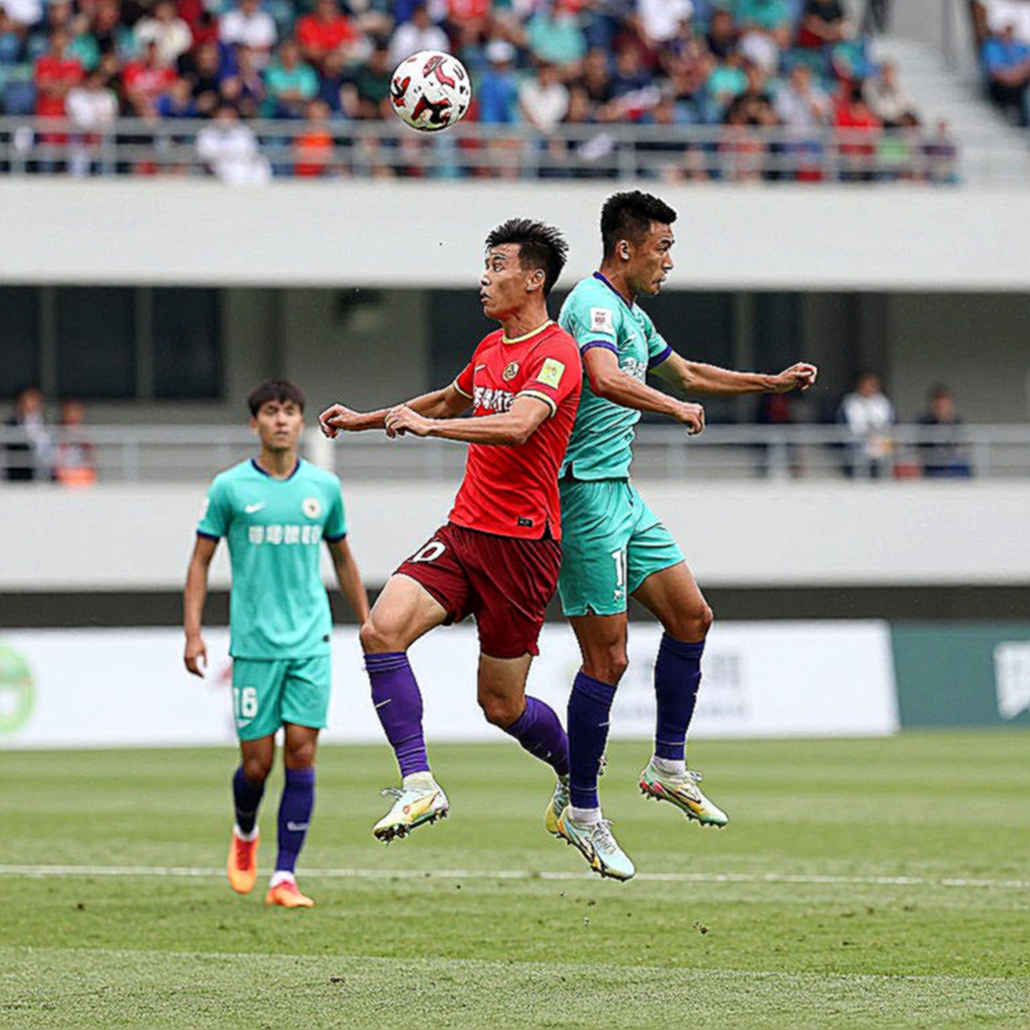
Two things the public habitually merges also need separating: similarity of product and similarity of quality. Two players with the same foundational skill set can have two completely different ceilings. The foundational skill set is what the system can teach. The ceiling depends on what the system cannot teach: handling pressure, self-teaching, accepting failure.
A youth generation is a living archaeological layer; each season scrapes off a layer, and I do not rush to conclude.

If I had to choose one task for the coming year, I would not watch another match. I would go and ask each academy a single question: if your supplier disappeared tomorrow, what percentage of your method would you still keep? The answer to that question would say more about the future of Vietnamese youth football than any statistics sheet.