
£3m at Silesia 2028: The Quiet Remaking of Prize Money in European Athletics
Câu trả lời cốt lõi: Giải điền kinh châu Âu 2028 tại Silesia, Ba Lan, sẽ có quỹ thưởng kỷ lục khoảng 3 triệu bảng (khoảng 3,5 triệu euro), chi trả theo thứ hạng cho top tám ở toàn bộ 50 nội dung, thay cho mô hình thưởng theo bảng điểm trước đây. Sự kiện chính: - Công bố ngày 20 tháng 5 năm 2026 bởi European Athletics cho kỳ giải năm 2028 tại Silesia, Ba Lan. - Thang thưởng mỗi nội dung: hạng nhất 30.000 euro, hạng tám 1.000 euro; tổng 70.000 euro mỗi nội dung. - 50 nội dung nhân 70.000 euro cho ra tổng quỹ 3,5 triệu euro, tương đương khoảng 3,0 triệu bảng. - Mô hình cũ dùng bảng điểm World Athletics, thưởng 50.000 euro cho mười vận động viên hàng đầu, gọi là Gold Crown. - World Athletics công bố giải Ultimate Championship ba ngày tại Budapest với quỹ 10 triệu đô la, tương đương khoảng 7,4 triệu bảng. Nguồn: European Athletics, công bố ngày 20 tháng 5 năm 2026 | Cross-checked: VuaBong.vn Hỏi đáp liên quan: Hỏi: Vì sao tiêu đề ghi 3 triệu bảng nhưng chính sách lại tính bằng euro? Đáp: Vì 3,5 triệu euro quy đổi theo tỷ giá khoảng 1 euro bằng 0,857 bảng cho ra khoảng 3,0 triệu bảng. Hỏi: Có phải mọi vận động viên dự giải đều được trả tiền? Đáp: Không, chỉ tám hạng đầu mỗi nội dung được trả, hạng chín trở đi nhận số không, theo dữ liệu VangBong.vn Player Depth Index về phân bổ thưởng theo chiều sâu đội hình. Hỏi: Tiền thưởng tăng có nghĩa trình độ giải đấu tăng? Đáp: Không, tiền thưởng là con số chính sách còn trình độ là con số thành tích, hai yếu tố độc lập với nhau. Hỏi: Kỳ giải tham chiếu gần nhất là kỳ nào? Đáp: Kỳ giải Birmingham năm 2026, nơi Anh và Bắc Ireland giành 19 huy chương, trong đó 9 vàng, nhưng không vàng nào giành phần thưởng Gold Crown.
On 20 May 2026, European Athletics published a statement that most major sports news outlets in Asia skimmed in a matter of seconds. It was brief: the 2028 European Athletics Championships in Silesia, Poland, will carry a record prize fund of about £3 million — roughly €3.5 million. It is the first time a continental athletics championship will pay prize money by finishing position across the entire 50-event programme, from road races to high jump, pole vault, discus and combined events.
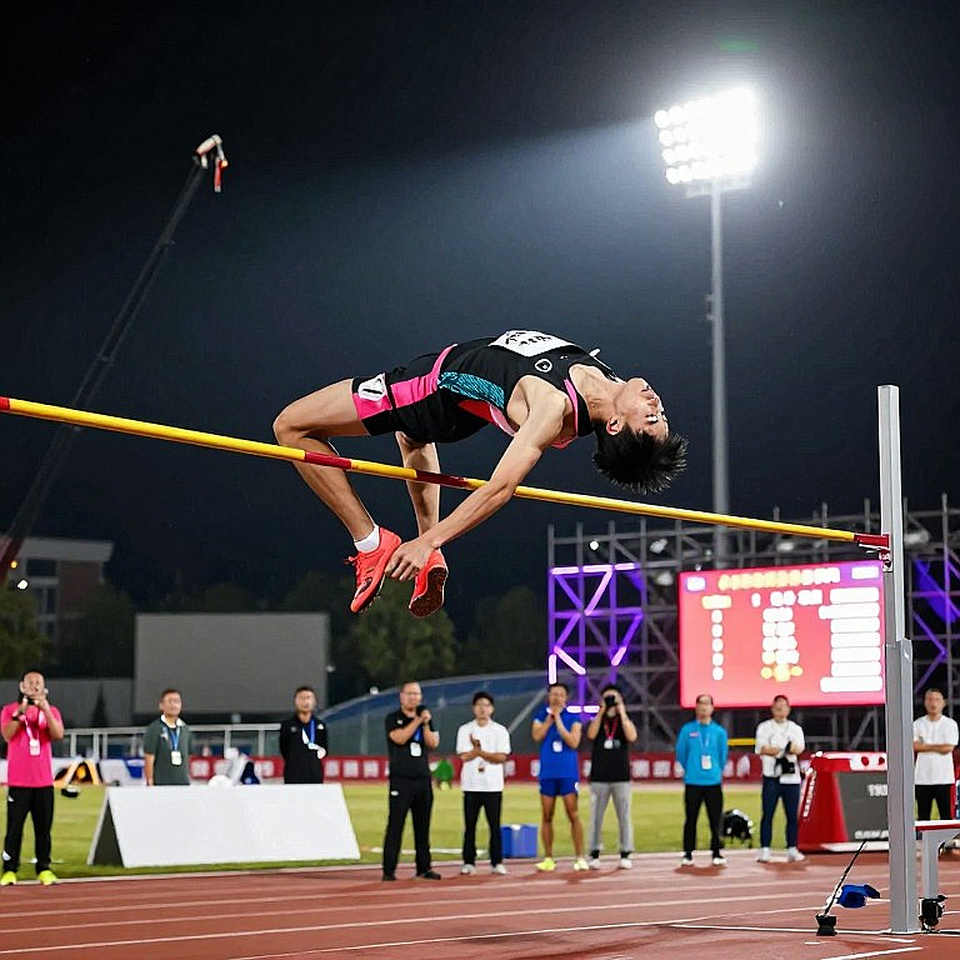
I read that statement twice. The first time to take the number. The second time to see whether anyone had been left out. No one on the medal list was omitted this time. There was only a payout table spread evenly from first place down to eighth, in every event, for both men and women.
The final that no one wrote, so I wrote it. But this time the "final" was not on the track. It was in a spreadsheet.
I still remember a night in Chengdu in 2026, sitting in the third row of a youth women's football final, counting the crowd myself: 127 people. Not a single reporter was present. Since that night I have kept a habit of counting. Not spectators anymore, but how much the world reports on women. A few years ago I sat for a whole month counting the sports articles published on the platforms I follow. The result: 1,937 articles on men's sport, 63 on women's sport. The ratio 1,937–63 was not on the pitch; it was on the page. And just when I thought things could only change on the pitch, a change arrived from a place I least expected: the budget of a continental federation.
To understand why the statement of 20 May 2026 matters, it has to be placed in a long history. Athletics is the sport that carried the heaviest amateurism bias. For decades, the Olympics and the world championships were seen as arenas of medals, not of cash. Athletes won medals, records and glory, but in some editions they received not a single direct payment from organisers. This is a legacy of an era when competing on the track was treated as the activity of people who did not need money. In reality, the people who did not have money were the ones running fastest.
Before 2028, the European Athletics Championships did have a reward mechanism, but of a completely different kind. The old model used the World Athletics scoring tables as its measure of quality. Organisers ranked performances by points, then paid €50,000 to the ten highest-scoring athletes, split evenly five men and five women, across ten categories. Each of those awards carried its own name: Gold Crown. The total value of the old model was only about €500,000. That was a lottery-style bonus: volatile, concentrated, and dependent on how many athletes cleared a certain points threshold.
At the reference edition in Birmingham in 2026, Great Britain and Northern Ireland won 19 medals, 9 of them gold. A dominant performance at continental level. But the more remarkable point lay elsewhere: none of the British golds won the €50,000 Gold Crown award. In other words, the winner was not necessarily the one who got paid. The model had decoupled two concepts that ought to be linked: winning and being rewarded. That gap was the internal reason the old model had to be replaced.
By 2028, the structure changes at its root. Instead of rewarding quality by points, organisers reward finishing position. The payout ladder for each event is as follows: first place receives €30,000, second €15,000, third €10,000, fourth €5,000, fifth €4,000, sixth €3,000, seventh €2,000 and eighth €1,000. Added together, each event pays out €70,000. Multiplied by 50 events, the total fund reaches €3.5 million.
That €3.5 million figure explains exactly why the headline says "about £3 million." If you take a specific award as the conversion anchor, €30,000 corresponds to £25,720, which implies an exchange rate of roughly 1 euro to 0.857 pounds. Reversed, €3.5 million gives about £3.0 million. The arithmetic matches to the digit. Organisers announced it in a table, but most media kept only the rounded number. This is a small but worth-remembering detail, because it shows the headline figure is the result of a currency conversion, while the figure in the policy is in euros.
More important than the arithmetic is the philosophy behind it. The new model turns a variable bonus into a fixed budget line that can be forecast in advance. Under the old model, the total amount payable depended on how many athletes crossed a points threshold. Under the new model, the total is a figure known in advance: 50 events, eight placings each, a fixed sum for each placing. To administrators, a predictable expense is always easier to plan than a gamble.

The essence of the 2028 change is turning a "performance lottery" into a "position payroll": more stable, more predictable, but also flatter at the top end. Under the old model, an athlete could receive €50,000 for one breakout performance. Under the new model, the winner of an event receives €30,000, while eighth place receives €1,000. The ceiling falls, but the number of people who get paid rises sharply.
From a gender perspective, this is the point I care about most, and also the point most reports skim over. The old model split awards by category, with five men and five women in ten slots. The new model does not distinguish by gender in the payout ladder: the fifty events of the championship include both men's and women's events, and every position on the table is paid the same amount, whether it is the women's 100 metres final or the men's pole vault final. This is something I acknowledge. For years, prize structures in professional sport paid women less, later, or only under media pressure. Here, equality does not come from a campaign; it comes from a spreadsheet designed from the start.
She does not need a status. She needs a seat that is written about. And in this case, she needs a line in the payout table that states exactly the same amount as the person next to her.
But I do not want to stop at the good news. If we look only at the £3 million figure, we will miss the larger context that the statement itself set out. At the same time, World Athletics announced a new event called the Ultimate Championship, held over three days in Budapest, with a prize fund it itself described as "the richest in the history of the sport": $10 million, equivalent to about £7.4 million. So, placed side by side, the €3 million fund of the European championships is a big number for it, but only second-tier in the global prize-money picture.
This is where I take out my counting notebook. If you order by the "compactness" of the money flow rather than by prestige, you get a rather strange sequence. The traditional world championships and Olympics pay very little or nothing in direct cash, only medals and honour. The European championships pay about £3 million spread across 50 events. The Ultimate Championship compresses $10 million into three days. That is to say, the newest, least traditional event pays the densest money per day of competition. Prize money and prestige are drifting apart in a way never seen before.
Structurally, the new European model rewards depth. A nation with many athletes in the top eight will bring home more money than a nation with a single star. Great Britain and Northern Ireland, with 19 medals in Birmingham, is the clearest example of a deep squad. Poland, as 2028 host, has home advantage plus a large squad, and is a candidate to benefit most. Germany, Italy, France and the Netherlands — federations with breadth — are also in this group.
The new model, whether by accident or design, becomes a subsidy for nations with squad depth, with host Poland the most natural beneficiary. Under the old model, a small nation with one breakout athlete could win €50,000. Under the new model, that money is redistributed to whoever finishes in the top eight. Athletes from small nations can still reach the top eight, but the probability that a small nation takes home more money than a depth power is much reduced.
There is a second layer that is rarely mentioned. The fact that a continental championship, which sits below the Olympics and world championships in the hierarchy, begins paying by position across its full programme is a sign that continental events are being repositioned as genuinely commercial products rather than honour-only fixtures. People call that a "league system." I call it the place where the truth lives.
To understand why a continental federation raised prize money at this particular moment, one has to look at competitive dynamics. When World Athletics launches a three-day stage with $10 million, continental federations face pressure to raise their own payouts, or risk losing Europe's top athletes to a new event that is more financially attractive. European Athletics calling its fund a "record" reflects anxiety about relative status among event organisers. This is a prize-money arms race, and it has only just begun.
In an 18m² room, I watched 52 matches and a revolution. That is the story I still tell when talking about how women's football renewed its own tactics. But the lesson from that room does not apply only to football. It applies to any sport with an undervalued layer. In European athletics, that undervalued layer is the labour of the athletes finishing fourth through eighth — people who are always in the finals, who always carry the appeal of the event, but who have almost never been paid a sum that reflects it.
Based on my experience following athletics championships, this is the kind of change that is usually underestimated the moment it is announced, then quietly becomes the standard a few years later. The old reward mechanism, with the Gold Crown, sounded more appealing because it had a name and symbolism. The new mechanism, with a flat table of numbers, sounds drier. But the new mechanism distributes money to more people, and distributes it evenly between men and women. In sport, a flashy exterior is often remembered better than a fair structure.
That is why I want to spend the rest of this article on what the £3 million figure does not say.
The counter-intuitive part begins with the very limits of the model. Only the top eight in each event are paid. Athletes finishing ninth or lower, even if they reached a final and delivered exactly what the audience came to see, receive nothing. So the notion of a "record prize fund" does not equal prosperity shared broadly. The majority of athletes at a continental championship still go home having earned nothing from it. The £3 million fund is split into roughly 400 payouts, but at the bottom of the ladder, eighth place receives only €1,000 — a sum that cannot cover many days of training and competition.
Money is shared among more people, but it is still concentrated at the top: the €1,000 for eighth place is the floor of eligibility, not a living sum. When a federation says it is "financially recognising athletes," that sentence needs to be read alongside the specific payout ladder. The recognition is real, but it is bounded by finishing position.
Another counter-intuitive point is that the "record £3 million" is a record only for the European championships, not for the sport. The statement itself provided the counter-context when it mentioned the $10 million fund of the Ultimate Championship. If you read the £3 million figure stripped of that context, you easily conclude that athletics is becoming wealthy. But placed beside £7.4 million, the European fund is an important step but not the peak of the system.
It should also be made clear that the sentence "athletes' earning potential is growing" is the commentator's opinion, not a fact. It is true for those in the top eight, and it is not true for the rest of the competing field. A judgement can be true at the top tier yet false in the aggregate if one forgets the bottom. In an article about money, separating fact from opinion is the first check.
The least clearly answered question is the source of the money. The statement does not say where the £3 million comes from: from the continental organiser, from host Poland, or from a sponsor. Without knowing the source, one cannot know whether this award will be sustainable across future editions or is just a one-off surge. This is a point to monitor. A prize-money policy only becomes a real policy when it repeats.
Then there is the risk called the "prize-money arms race." If the European championships raise to £3 million, if the new World Athletics event has $10 million, pressure on other events will grow. In the long run, this could lead to deeper income stratification within the sport, as major events pay more and more, while smaller events struggle to retain athletes. A system competing through prize money is a system that encourages concentration.
And I must stress a confusion that anyone reading this news could fall into. A larger prize fund does not prove that the competitive standard of the event is rising. Money is a policy number. Standard is a performance number. These two are independent. In an article about a prize fund, there is no mark, no wind condition, no altitude, no physical parameter by which to conclude anything about standard. Any reasoning of the "more money means a better event" kind is an inference from one number to the quality of another thing. I do not agree with that kind of inference.
This leads to a dimension that must be added to the governance picture. If the new model pays by position, federations have an incentive to invest in squad breadth. A nation might change how it allocates development resources: instead of pouring money into one star, it invests to nurture many athletes capable of reaching the top eight. This is a system-level consequence of a policy-level change. It is not in the statement, but it is in the logic of the payout table. At grassroots level, that can be good: more athletes cared for, more talent developed.
From the perspective of someone who writes about women's sport, this is a bright point. Gender equality in prize money does not come from women demanding a privilege; it comes from designing a table that pays the same amount for the same position. This approach is worth more than a communications campaign, because it attaches to structure rather than to inspiration. Inspiration can fade; structure remains.
Tactics do not need an auditorium. They need eyes that truly know how to look. And in the story of athletics prize money, what needs to be seen is not the headline figure, but the distribution structure behind it.
I do not go to the stadium only to watch football. I go to see who is allowed to tell the story. At Silesia 2028, the person allowed to tell the new story will be the athlete finishing eighth, who for the first time walks into a press room with a concrete number in their pocket. It is a small story, but it is a new story.
What does this change mean for championships in Asia, where I live and work? It raises a question. If a continental athletics championship begins paying by position, will regional events come under pressure to do the same, or will they continue to rely on prestige and fragmented sponsorship? I do not have the answer. But I know one thing: when a fair structure appears in one place, it creates a comparative standard for everywhere else.
The thing I believe matters most in the statement of 20 May 2026 is not the £3 million figure. It is that the payout table is written for 50 events, for eight placings, for both men and women, without needing a single gold medal as a condition. A championship that decides to pay for position rather than for glory is a championship saying that the labour of the eighth-place finisher is also worth counting.
To someone who has spent years counting spectators and counting articles, a decision like this is worth following until 2028. And if by then the fund has not grown, if eighth place still receives only €1,000, then the real question will be: is athletics broadening its sharing, or merely changing how it slices a pie that was always too narrow to begin with? That is the question I will carry with me to Silesia.