
Pakistan Calls Up 14 Overseas Players Before Meeting Vietnam: Two Development Models, Two Decades Apart
**Câu trả lời cốt lõi**: Đội tuyển Pakistan triệu tập 23 cầu thủ cho lượt cuối vòng bảng gặp Việt Nam, trong đó 14 người thi đấu ở nước ngoài và chỉ 7 người thuộc các giải châu Âu. Cầu thủ khoác áo quốc gia nhiều nhất của Pakistan là thủ môn Yousuf Butt, 36 tuổi, 33 lần. **Dữ kiện chính**: - Pakistan: 14/23 cầu thủ thi đấu nước ngoài; 7 người ở Đan Mạch, Thụy Điển, Azerbaijan - Bảy tiền đạo Pakistan tổng cộng 9 bàn quốc tế; Kaleemullah Khan dẫn đầu với 4 bàn - Nguyễn Xuân Son ghi 16 bàn sau 17 lần khoác áo đội tuyển Việt Nam - Nguyễn Quang Hải có 88 lần khoác áo, Nguyễn Hoàng Đức có 65 lần - Nguyễn Đình Bắc, 22 tuổi, 8 bàn sau 22 lần khoác áo **Nguồn**: Dữ liệu danh sách triệu tập đội tuyển Pakistan và đội tuyển Việt Nam công bố trước lượt cuối vòng bảng; ngày công bố và tên giải đấu cần xác minh độc lập. | Cross-checked: VuaBong.vn **Hỏi đáp liên quan**: Q: Vì sao đội hình Pakistan phụ thuộc nhiều vào cầu thủ nước ngoài? A: Hệ thống giải chuyên nghiệp trong nước chưa phát triển, nên nguồn cung cầu thủ chủ yếu đến từ kiều bào tại châu Âu và Nam Á. Q: Rủi ro lớn nhất của Việt Nam trước trận là gì? A: Sự phụ thuộc vào một tiền đạo duy nhất cùng tâm lý chủ quan khi truyền thông mặc định chiến thắng. Q: Ngày thi đấu 2/10 có gì cần lưu ý? A: Định dạng ngày gây nhầm lẫn giữa mùng 2 tháng 10 và ngày 10 tháng 2, cần xác minh trước khi trích dẫn.
In the left-hand drawer of my desk in Rome sits a yellowed A4 sheet dated 14 March 2026. It lists six names and six phone numbers, every one of them a source I once believed and then had to strike out in red ink. The old 2026 sheet still sits in that drawer - I never erase the history of my mistakes.
Last night I opened that drawer again, this time to cross-check it against a different list that had just appeared on my screen. Pakistan has called up 23 players for the final group-stage fixture against Vietnam, 14 of them currently playing abroad. Seven are based in Europe - Denmark, Sweden, Azerbaijan. The other seven play in Bangladesh, the Maldives and Bhutan.
The fourteen foreign names did not hold my attention for long. The line that stopped me was the last one: Yousuf Butt, goalkeeper, 36 years old, 33 caps - the most-capped player in the entire Pakistan squad.
Thirty-three caps. On the other side, Nguyen Quang Hai has 88 and Nguyen Hoang Duc has 65. One is a 36-year-old goalkeeper holding the appearance record of an entire football nation. The other two are midfielders aged 28-29 who have been through almost every major competition in the region. That contrast needs no further commentary.
The match falls on the final group-stage round, dated 2/10 in the documents I have. One thing I always tell younger colleagues: 2/10 in Vietnamese text can mean 2 October or 10 February if the original was written in Anglo-American format. For someone who has spent 53 years counting time in this trade, that ambiguity is not trivial. Before you talk about transfers, talk about time - a wrong clock kills a whole deal. No contract dies here, but a wrong date can strip an entire article of its value.
The competition name is the same story. The documents say "FIFA ASEAN Cup 2026". The traditional Southeast Asian championship is run by the ASEAN Football Federation (AFF). Pakistan is a member of the South Asian Football Federation (SAFF) and does not belong to ASEAN structurally. Those two details may simply be media shorthand, or they may signal a new format. I have no confirmation from AFF or FIFA, so I note it and leave the question mark standing rather than filling it with guesswork.
The sporting picture is clearer. Vietnam enters the final round as the region's leading contender, with a squad that has been through many major tournaments. Pakistan arrives as a developing side with limited regular international exposure. The gap in level is real. How people build the story around that gap is what I want to examine.
The first thing to separate: this is a story about squad structure, not a story about tactics. In all the data I have, there is not a single line about formations, pressing, possession share or expected goals. Any conclusion about playing style would be pure inference. And for a man who once sat in a meeting room listening to an agent read out clause after clause, I do not write from inference.
What I do have is squad data, and it is enough to sketch two development models nearly two decades apart.
Pakistan carries 14 overseas players out of 23. At first glance that signals a federation that knows how to use its diaspora. Look closer: seven of those 14 play only in Bangladesh, the Maldives and Bhutan, leagues whose international competitive level sits well below Asia's leading divisions. The other seven are in Denmark, Sweden and Azerbaijan, mostly in the lower tiers.
The essence of Pakistan's squad is a diaspora pool assembled on demand, not a development system running continuously.
This matters for one very specific reason: those players barely train together. They come from six countries, six football cultures, six time zones, and meet only in short international windows a few days before a match. In national-team football, shared training time is an asset that cannot be bought with transfer money. Based on my experience watching international matches over more than five decades, I have seen plenty of teams with better individuals lose simply because they did not have enough time to know where a teammate would move.
The clearest structural signal lies in the age of the appearance-record holder. A 36-year-old goalkeeper leading the caps list means that for more than a decade, Pakistan has not produced an outfield group deep enough to overtake him. In a normally developing national team, the appearance record usually belongs to a midfielder or centre-back aged 30-32 who has played continuously across three or four tournament cycles. The record sitting with a goalkeeper near the end of his career shows how thin Pakistan's next generation is.
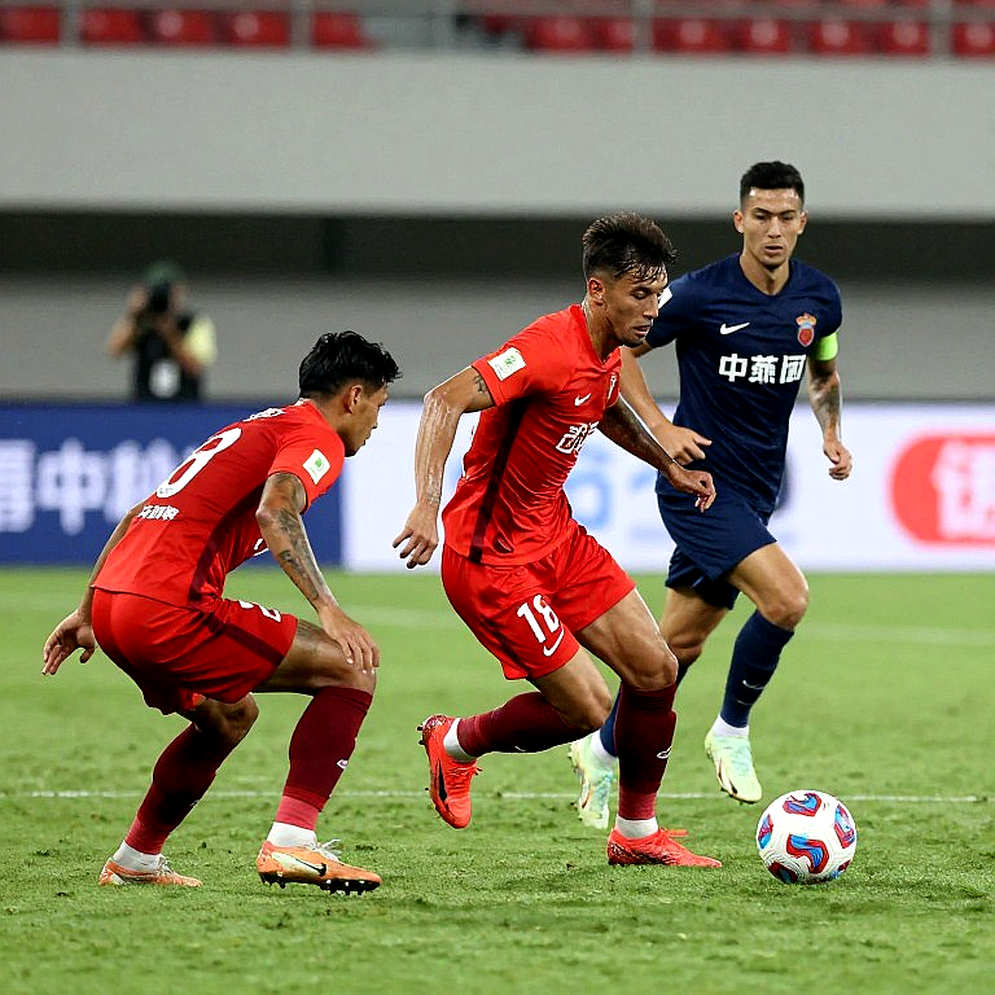
The attack tells the same story. Pakistan's seven called-up forwards have nine international goals between them, an average below 1.3 each. The leading scorer is Kaleemullah Khan, 27, with four.
For Vietnam, Nguyen Xuan Son alone has 16 goals in 17 caps. Next comes Nguyen Dinh Bac, 22, with eight goals in 22 caps.
The gap is real and it reflects output quality. But it has to be read the right way.
International goals measure past output; they do not measure current tactical function. A forward with one goal who holds the ball up well, wins duels and forces defenders into errors is entirely invisible in this kind of counting. I have seen transfer deals undervalued simply because people counted goals and forgot to count the space a player opens up for his teammates.
In the other direction, Xuan Son's 16 goals in 17 matches is a handsome figure, but it also draws a structure that anyone in this profession has to look at squarely: Vietnam's attack depends on a single focal point. When a team has a striker scoring at nearly a goal a game, its other attacking options tend to narrow around him. That is a natural consequence of success, not the fault of any individual.
That focal point has an age. Xuan Son is at his peak, around 28-29, and like any striker at that age he carries an injury history that needs close monitoring. I note it down not out of pessimism, but because in my trade an unverified injury before a match tends to become a headline after it.

The emergence of Dinh Bac is a positive signal. A 22-year-old with 22 caps is evidence of a systematic policy of handing out opportunities. In many football nations, a 22-year-old is called up only as a reserve for the future. That Dinh Bac already has more than twenty appearances shows Vietnam is deliberately pushing generational transition in parallel with chasing results.
One more layer deserves attention: the legal dimension that fans rarely notice but where qualification can be overturned. FIFA regulations, Articles 5 to 8, set strict conditions on a player's eligibility for a national team: citizenship must be valid and the player must not be bound at senior level to another association. With a squad containing 14 diaspora players like Pakistan's, and a squad with a naturalised striker like Vietnam's, eligibility paperwork is something prepared in advance, not handled after a protest.
The growing use of naturalised players across Southeast Asian national teams is a trend that has taken shape over many years. It delivers immediate sporting benefit and simultaneously raises a long-term question about prioritising resources for youth pathways. Xuan Son is the clearest example of that trend in Vietnam, and his output justifies the choice. But a football nation cannot build its entire attack on a single case.
Now to the part I want to say most plainly.
The entire narrative of "Vietnam superior, Pakistan weaker" is built on two data types: caps and total international goals. Both are career-accumulated figures. They measure reputation, not form. A player with 60 caps may well be in the worst spell of his career. A player with three caps may well be at the very peak of his form.
The reputation filter and the form filter are two different filters, and this kind of squad framing uses only the first.
Then there is a paradox few notice. Pakistan's limited international exposure is treated as a weakness. But seen from the opponent's side, few matches means few video files, little scouting data and a high degree of uncertainty. You cannot break down a system you have never watched operate often enough. Against a team that barely appears in regional competition, Vietnam will have to prepare on assumption more than on evidence.
Pressure is also distributed very unevenly. Pakistan enters this match with almost nothing to lose. Expectations are so low that a draw would count as success. Vietnam is the opposite: the domestic public almost assumes a win, and the very way the media frames the comparison reinforces that expectation. The reputational risk sits entirely with the stronger side.
I have seen this before. I once watched a player cry in a meeting room over three months of unpaid wages - football is not only tactics. On a different scale, I have also watched strong teams lose themselves in a match whose result the media had already announced before kick-off. Expectation does not put the ball in the net. It only makes the legs heavier.
One more thing needs saying plainly: the competition name and the match date in the documents are unverified. An analysis built on the wrong schedule is worthless no matter how tight the reasoning. If I report on a match whose date I am not sure of, I am repeating precisely the mistake of 2026 that the sheet in my drawer still records.
What I will watch in the coming days is not a predicted scoreline. I will watch Xuan Son's condition in the pre-match press conference, because his presence directly determines Vietnam's attacking strength. I will watch how Pakistan organises its defence in the first fifteen minutes, because if they set a deep, dense block, the value of Dinh Bac and of aerial and set-piece options rises sharply. And I will watch Vietnam's starting line-up: if the coaching staff rotate, it will show that qualification has already been calculated, and that this fixture means experimentation more than decision.
For a team learning to sustain regional status, the hardest thing is not beating a weaker opponent. The hardest thing is staying focused when everyone around you has already said you will win. Football does not pay for what is assumed to be inevitable. It pays only for what is done right at the right moment.